In the food and beverage industry, compliance is extremely important to ensure the protection of consumer health in food products. Businesses have a moral obligation to be acutely aware of what goes into the production and sale of their products.
Where compliance becomes even more complex is when businesses must consider regulations at a global scale. These days, changes in a country’s food and beverage regulations can create challenging situations for companies unable to adapt. How organizations handle changing legislation — and even more stable global industry compliance-related activities — will determine the success of their products in the market.
Compliance in the product development process
In the food and beverage industry, three basic factors affect product compliance:
By properly implementing these three policies, food and beverage companies can protect themselves from global industry compliance issues — and their customers from potential health-related issues caused by non-compliant processes.
Global legislations and practices
Many countries are updating their existing industry laws to meet modern standards and processing demands. Here are a few key examples of how global legislations are shifting:
The EU’s General Food Law states that all people must have access to safe and wholesome food. Regulators intend to impose controls on registration of establishments, imports, procurement of raw materials, manufacturing, packaging and sale of food.
The Safe Food for Canadians Regulation seeks to improve food safety by imposing tougher restrictions and penalties on businesses whose products pose a health risk to consumers. They intend to do this by making registration of establishments mandatory and by controlling imports.
The Food Standards Australia New Zealand (FSANZ) governs not only F&B manufacturers, but also suppliers, retailers, and restaurants. Compliance issues related to food labeling and food tampering are primary concerns of the FSANZ.
As these global industry compliance legislations change, food and beverage businesses must adapt accordingly — or otherwise risk the safety of their customers and the security of their business.
Covering your bases with industry-friendly software
Maintaining food and beverage global industry compliance standards across your entire operation is a challenge even for the most seasoned business owners. That’s why using the right tools is essential to making your processes as efficient and effective as possible.
SpecPage from Revalize is a product lifecycle management (PLM) and compliance software designed with the food and beverage industry in mind. From comprehensive compliance guides to product data management, SpecPage has solutions tailored to each step of your process.
Here are some of the key features a solution like SpecPage can offer your business:
SpecPage Compliance Guide
The SpecPage Compliance Guide add-on comprises more than 5 million terms covering over 90,000 global industry compliance and regulations standards. This guide helps users ensure their product recipes and specifications comply with global regulatory requirements — including information on additives, nutritional values, packaging, contaminants, and Identity Standards.
Global Data Synchronization Network
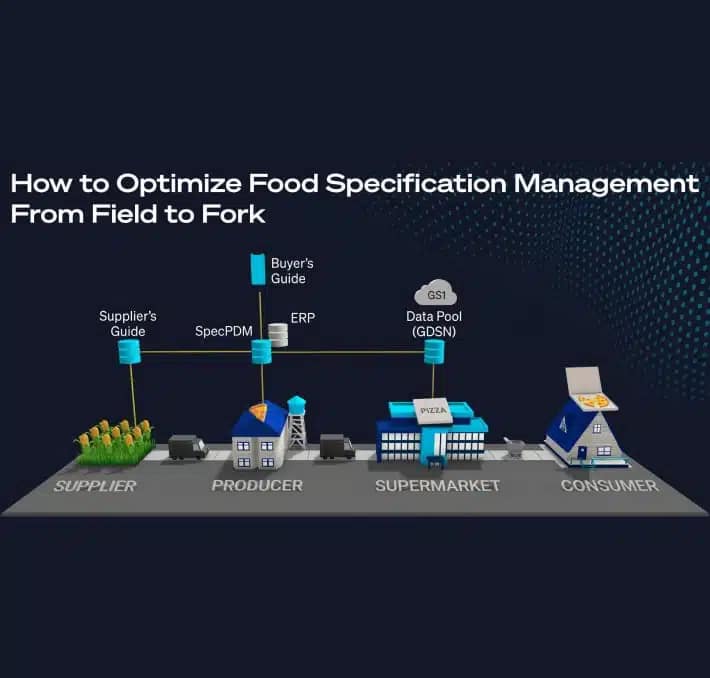
The challenge of global governance and compliance requires a platform that enables businesses to integrate product information into a central location. The Global Data Synchronization Network (GDSN) is a global database that brings together thousands of companies from the global food and beverage industry. Here, businesses can find information about various product specifications — from ingredients used to information about product tracking.
Businesses that use the GDSN are also recommended to use other software and data integration tools to further leverage technology in food and beverage manufacturing. SpecPage offers various additional tools that cater to the specific requirements of individual stakeholders in the global F&B industry.
Supplier's Guide
The
Supplier’s Guide is a tool that allows suppliers to provide important product specifications and upload important documents within a global repository. These specifications and certificates help food and beverage businesses maintain product compliance at the production level, by helping them choose compliant suppliers.
Buyers Guide
SpecPage also provides a
Buyers Guide, which is a collection of web-based product catalogs that are also available in a fully responsive mode on any mobile device. These catalogs contain important information about a business’s final product. Distributors and retailers will have access to this information, enabling them to trade with product complaint companies — thereby ensuring their own compliance.
Support your R&D and compliance with SpecPDM
SpecPage’s leading SpecPDM platform is revolutionizing the way the F&B industry integrates product development information. Acting as a central product specification database, SpecPDM supports all R&D and labeling activities. The platform gives product developers and regulators access to global compliance regulations, helping them universally meet product compliance requirements.
SpecPDM is powerful on its own, but even better when combined with the additional SpecPage tools. The SpecPage suite of solutions is an effective arsenal against the ever-demanding global industry compliance regulations.